
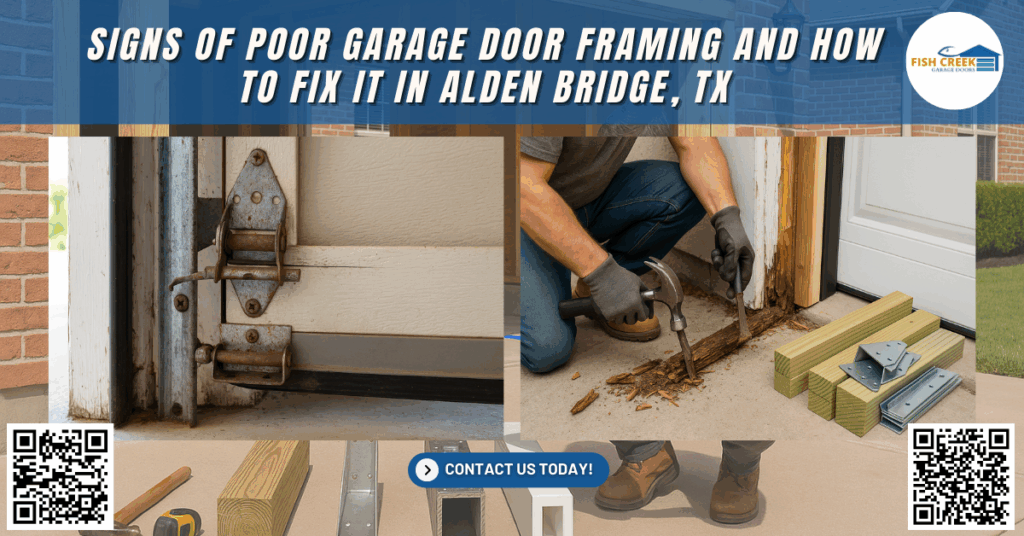
Last summer in Alden Bridge, Texas, we received a service call from a homeowner experiencing a persistent issue with their garage door. They had noticed sticking, loud creaking sounds, and poor sealing along the edges. While they suspected a failing opener, our team of trained garage door specialists quickly identified the real issue: the garage door framing was compromised. The header had started to sag, the side jambs were no longer plumb, and moisture damage had affected the structural integrity of the frame. This scenario is far more common than many homeowners realize, especially in climates like ours where moisture and foundation movement are routine.
According to a report by the International Association of Certified Home Inspectors, framing issues contribute to nearly 30 percent of premature garage door repairs. That number is even more significant in areas with clay-heavy soil and high humidity, which describes Alden Bridge perfectly. Many homeowners do not see the early warning signs until the problem has caused visible misalignment or mechanical failure. These issues can lead to expensive replacements and even safety hazards if ignored.
The garage door framing functions as the structural skeleton that defines the garage door opening and supports the door’s smooth operation. It includes components such as the side jambs, the head jamb or header, and supporting studs or king studs, often referred to as goal posts when flanking the sides. When constructed with the correct measurements and proper materials, a garage door frame provides long-term strength and reliable alignment. When done poorly, it leads to operational problems, drafty conditions, and even risks to the garage door opener. In this in-depth guide, we will walk you through how to recognize the signs of poor garage door framing and what steps can be taken to fix the issue effectively.
What Is Garage Door Framing?
Garage door framing refers to the structural framework that creates the perimeter and foundation of the garage door opening. It includes several key pieces: the vertical side jambs, the top horizontal beam known as the head jamb or header, and the supporting vertical king studs or goal post studs that anchor the frame into the wall. Together, these pieces form the rough opening into which the garage door is installed. The quality and placement of these framing materials directly impact how the garage door opens, closes, and seals.
Side jambs are placed along the left and right sides of the garage door opening, and they are typically made of pressure-treated lumber, PVC jamb material, or metal, depending on the design. The head jamb spans across the top and must be level to ensure that the garage door panels close evenly. The framing studs secure these main pieces to the surrounding wall and ceiling. If this frame is not constructed using accurate measurements, level tools, and proper nails or fasteners, the entire garage door system may suffer from alignment problems and friction during operation.
A well-built garage door frame not only supports smooth operation but also contributes to insulation, weather protection, and long-term structural stability. It is vital to get the framing process right, including using a measuring tape, placing lumber in the correct locations, nailing components with precision, and verifying level placement. Without these steps, problems will eventually develop regardless of the door opener or garage door size.
Common Signs of Poor Garage Door Framing
Homeowners can spot the warning signs of garage door framing issues with a little guidance. When a frame begins to shift, rot, or lose its shape, several symptoms may appear that affect both function and safety.
Uneven Gaps Around the Door
One of the clearest indicators of poor framing is the presence of uneven gaps between the garage door and the frame. These gaps may appear along the sides, top, or bottom and can vary in width. A door should have a tight but smooth seal against the jambs and floor. When the door no longer fits snugly into its frame, it allows drafts, water, dust, and pests into the garage.

The Door Does Not Sit Flush When Closed
A well-functioning garage door should rest flat against the jambs and floor when closed. If the door appears crooked, tilted, or fails to touch the floor evenly, it usually means the side jambs or header are misaligned. This issue can result from a warped frame or from foundation shifting that causes the entire opening to move out of square.
The Door Sticks or Feels Heavy
If the garage door drags along the track, makes a scraping noise, or feels unusually heavy when opening, the problem could be the framing. A rough opening that is not square causes friction and resistance, especially near the side jambs or top jamb. This adds strain to the springs, rollers, and garage door opener, leading to early mechanical failures.
Visible Damage to the Frame
Over time, moisture can weaken wood or rust metal framing. Signs of visible damage include cracked, warped, or soft lumber, rotting at the base, or rusting near brackets and nails. If you press on a piece of framing and it feels spongy or crumbles under pressure, it likely needs replacement.
A Sagging or Bowing Header
The header should remain perfectly straight and level. If it bows in the middle or sags downward, it can interfere with the garage door’s top panel. This not only impacts function but also reduces the structural integrity of the opening, causing long-term issues with weight distribution and alignment.
Causes of Poor Garage Door Framing in Alden Bridge, TX
Understanding the local factors that lead to poor garage door framing can help prevent future issues. Alden Bridge presents several environmental and construction-related challenges.
High Humidity and Moisture Exposure
In Texas, moisture levels remain high for most of the year. When framing lumber is not sealed or pressure-treated, it absorbs water, swells, and eventually rots. This is especially common near the base of side jambs and along the sill plate near the garage floor, where rainwater can collect.
Construction Errors and Poor Installation
Many framing problems begin with construction shortcuts. If the garage door opening is framed using the wrong size lumber or if the measurements are inaccurate, it will not accommodate the garage door properly. Using the incorrect nails, failing to level the head jamb, or misplacing studs can create problems from the start.
Soil Movement and Foundation Shifting
The soil in Montgomery County is predominantly clay-based, which expands and contracts with moisture. This causes garage foundations to lift or sink unevenly, pulling the garage door frame out of square. Side jambs may lean inward or outward, and the rough opening may become skewed over time.
Termites and Other Pests
Wooden framing can attract pests, especially if it is untreated or exposed to moisture. Termites and carpenter ants weaken the structural parts of the frame, especially at connection points such as the bottom of the side jambs and sill plates. Over time, the frame may lose the strength needed to support smooth operation.
How to Fix Poor Garage Door Framing
Correcting poor garage door framing involves a combination of accurate measurements, quality materials, and expert techniques. Here is a step-by-step guide to addressing and fixing framing issues.
Inspection and Diagnosis
Begin with a full visual and structural inspection. Use a measuring tape to check the width and height of the garage door opening. A level and framing square can help determine if the frame is still square. Pay attention to gaps, warping, signs of rot, or sagging lumber.

Reinforce or Replace Framing Materials
If the damage is localized, the next step may involve reinforcing the existing frame. This can be done by adding extra lumber alongside the damaged pieces, using brackets, or applying wood hardeners. If the framing is severely compromised, it is better to remove and replace the affected side jamb, head jamb, or goal post studs entirely with pressure-treated lumber or composite materials.
Rebuild and Realign the Frame
Use accurate measurements to reconstruct the rough opening. Measure the width between side jambs and the height from floor to header. Ensure each piece is nailed securely using construction-grade nails or bolts. The sill plate should be level with the garage floor and securely fastened. Each piece must be placed in the right location to ensure a perfect fit for the garage door.
Add Weather Seals and Trim
After restoring the structural frame, install fresh weather stripping and PVC trim to protect against future moisture. Sealing gaps and adding insulation will improve energy efficiency and block pests.
Adjust the Garage Door and Opener
Once the frame is secure and plumb, test the garage door for smooth operation. Adjust the tracks and springs as needed. Recalibrate the garage door opener and check that the center bracket and belt drive system are properly aligned to avoid further stress on the motor.
When to Call a Garage Door Specialist
Garage door framing requires precision, the right tools, and a strong understanding of structural construction. While some minor repairs might seem manageable, replacing or rebuilding a garage door frame should be done by a professional. A framing error can create ongoing mechanical issues and compromise the safety of the garage.
If your garage door shows signs of sticking, sagging, or misalignment, calling a garage door specialist ensures the problem is addressed properly. Professionals have access to the right materials, can identify hidden damage, and follow a step-by-step guide to deliver a functional result that will last.
Preventing Future Garage Door Framing Issues
After your garage door framing is repaired, you can take several steps to prevent problems from recurring.
- Use high-quality, pressure-treated lumber for any framing components near the floor or wall.
- Apply sealants and exterior paint to all exposed framing materials to protect against moisture.
- Ensure proper drainage around the garage by installing gutters and downspouts.
- Perform annual inspections, checking for signs of wood rot, pest damage, or misalignment.
- Schedule routine maintenance with a garage door technician to keep the opener, door panels, and frame in good working condition.
Frequently Asked Questions (FAQs)
1. What type of wood is best for garage door framing in humid climates like Alden Bridge, TX?
Pressure-treated lumber or cedar wood is ideal for garage door framing in humid areas. These materials resist moisture, rot, and insect damage better than untreated wood, making them more durable for long-term use.
2. Can poor garage door framing affect energy efficiency in my home?
Yes, gaps or misalignment in the garage door frame can allow outside air, moisture, and even pests to enter the garage. This reduces insulation efficiency and can increase heating and cooling costs, especially if your garage is attached to your home.
3. How long does it typically take to repair or replace a garage door frame?
Depending on the extent of the damage, repairs can take a few hours, while full replacement may require one to two days. Factors like material selection, weather conditions, and structural issues may also impact the timeline.
4. Is it possible to widen or resize a garage door opening during a frame repair?
Yes, resizing a garage door opening is possible but requires structural planning and code compliance. A professional contractor can assess whether your garage wall can support a wider or taller frame before making any modifications.
Final Thoughts
Your garage door framing plays a foundational role in ensuring safe and smooth garage door operation. In areas like Alden Bridge, where climate and soil conditions present unique challenges, a strong and accurately built frame is even more essential. Recognizing early signs such as uneven gaps, sticking doors, and visible frame damage can help you take action before costly repairs are necessary.
Taking the right steps to fix or rebuild the frame involves careful measurements, quality materials, and a clear process. Whether you need a partial repair or a brand-new frame, working with an experienced professional ensures your garage door functions properly, enhances your home’s security, and stands up to the elements for years to come.
How Can Fish Creek Garage Doors Help You?
At Fish Creek Garage Doors, we are dedicated to providing expert garage door framing solutions in Alden Bridge and the surrounding areas. Our trained technicians understand how climate, moisture, and soil movement affect your garage structure. Whether you are dealing with a sagging header, misaligned side jambs, or moisture-damaged lumber, we have the experience and tools to rebuild your frame for lasting strength and performance.
We begin every job with a thorough inspection, using accurate measurements, the right tools, and durable materials to ensure a perfect fit. Our framing repairs are designed to align with your existing garage door size, opener specifications, and the unique environmental conditions of your home.
📍 Address: 791 Fish Creek Thoroughfare, Suite 51, Montgomery, TX 77316
📞 Phone: (936) 280-0359
Contact us today to schedule a garage door framing inspection and take the next step toward a more secure, functional, and long-lasting garage system.