
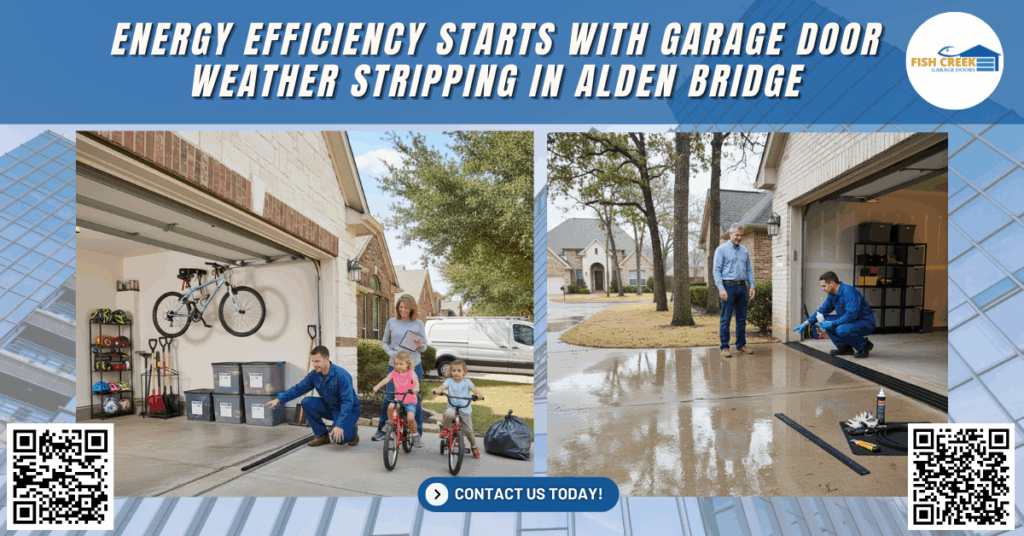
In the beautiful and vibrant community of Alden Bridge, where families invest in quality homes and energy-conscious upgrades, many residents still find themselves facing unexplainably high utility bills. One homeowner recently called Fish Creek Garage Doors after months of rising energy costs. Their HVAC system was relatively new, the attic insulation was up to code, and their windows were double-paned and sealed properly. However, they overlooked a critical vulnerability: the garage. Our inspection revealed that the garage door weather stripping had deteriorated, leaving gaps at the bottom and sides of the door. These small gaps allowed hot air, cold air, and moisture to enter, significantly increasing the energy load on the home’s HVAC system.
According to the U.S. Department of Energy, air leaks around windows, doors, and other openings are responsible for up to thirty percent of total energy loss in an average American home. In Alden Bridge, where realfeel temperatures can soar above realfeel®28° in the summer or drop to realfeel®24° in the winter shade, sealing these entry points is essential. The garage, being one of the largest openings in the house, plays a surprisingly large role in the home’s overall thermal envelope.
At Fish Creek Garage Doors, we believe that garage door weather stripping is not just a maintenance task but a critical home improvement step. Whether you use your garage for storage, as a workshop, or simply to protect your vehicle, properly sealing it against outdoor conditions is the foundation of a truly energy-efficient home.
What is Garage Door Weather Stripping and Why Does It Matter?
Garage door weather stripping refers to the application of specialized sealing materials designed to close off gaps between the garage door and the surrounding frame. These seals, which include bottom seals, side seals, top seals, threshold seals, and optional brush seals, prevent outside elements from entering the garage. Their main purpose is to create an airtight and weatherproof barrier.
Proper garage door weatherstripping performs multiple roles. First and foremost, it prevents drafts by closing off the openings where air can leak through. Secondly, it protects against moisture, which is especially important in Alden Bridge, where sudden rain and high humidity levels can lead to concrete condensation, rusted tracks, or even mold. Thirdly, it offers a physical barrier to pests, including insects, snakes, rodents, and other small animals that may attempt to squeeze through exposed gaps in search of warmth or shelter.

In addition to protecting the garage, weather stripping also supports indoor comfort. If your garage is attached to your house, the temperature fluctuations inside can directly affect the adjacent rooms, raising or lowering interior temperatures and pushing your HVAC system to work harder than necessary.
The Different Types of Garage Door Weather Stripping Explained
Understanding the different types of garage door weather stripping can help you make informed decisions about repairs or upgrades. Each component of the weatherstripping system targets a specific area of vulnerability and contributes to the overall insulation and airtightness of your garage.
Bottom Seals
The bottom seal is often the first line of defense. Positioned along the underside of the garage door, this seal compresses against the floor when the door is closed. Over time, these seals can wear down due to friction with the concrete slab, exposure to water, or damage from pests. High-quality rubber or EPDM bottom seals provide superior flexibility and longevity. In homes with uneven garage floors, a straight holder combined with a thick rubber seal can fill irregular gaps and block water from seeping in during storms.
Side and Top Seals
Side and top seals are mounted on the frame that surrounds the garage door. These seals, typically made of durable vinyl or PVC material, are compressed against the door when it closes. They are essential for preventing air leaks and ensuring the entire perimeter of the door remains tightly sealed. They also help stabilize indoor temperatures during periods of extreme weather, such as realfeel®28° days or rapid temperature drops at night.
Threshold Seals
Threshold seals are fixed directly onto the garage floor at the entrance. These thick rubber or polypropylene seals create a raised surface that the bottom of the garage door rests on when closed. A threshold seal is especially effective in preventing rainwater from entering the garage, even during heavy downpours or flash flooding. They also block insects and small animals from crawling in at the base.
Brush Seals
Brush seals, or brush kits, are commonly used in commercial garages but can be beneficial for residential homes as well. These flexible bristles block debris, dirt, and wind from penetrating the garage while allowing for smoother operation of the door. When installed on the sides and top of the door, brush seals help maintain a tight barrier in garages with heavy traffic or irregular door frames.
How Weather Stripping Boosts Energy Efficiency
Garage door weather stripping is an inexpensive solution that delivers significant returns in energy savings. By sealing your garage from outdoor elements, you prevent conditioned air from escaping and reduce the influx of hot or cold air. This stabilization of indoor temperatures translates into lower energy bills and reduced wear and tear on your HVAC system.
Reduced Energy Loss
A well-insulated garage acts as a buffer zone between your home and the outdoors. Without effective sealing, your HVAC system must compensate for fluctuating temperatures. The result is an overworked system that drives up energy consumption and accelerates mechanical failure. By installing a complete weather stripping system, you minimize energy loss and extend the lifespan of both your heating and cooling units.
Improved Indoor Air Quality
Weather stripping also helps improve indoor air quality. Gaps in the garage door can allow dust, allergens, exhaust fumes, and pollen to enter. Sealing these gaps keeps the air cleaner and healthier for your family, especially if your garage is connected to your kitchen or living room.
Financial Savings
Homeowners who install new weather stripping can expect a noticeable reduction in their monthly utility bills. Although results vary, many homeowners in Alden Bridge report savings of 10 to 20 percent, especially during peak heating and cooling seasons. These savings accumulate over the years, making weather stripping one of the most cost-effective energy efficiency upgrades available.
Signs It’s Time to Replace Your Garage Door Weather Stripping
Even the best materials wear down over time due to repeated exposure to the elements. Knowing when to replace your weather stripping can prevent costly water damage, pest infestation, or energy inefficiency.
Warning Signs to Watch For:
- Light or air visibly leaking through the bottom or sides of the garage door
- Water is pooling inside the garage after a rainstorm
- Rubber or vinyl that has become dry, cracked, or brittle
- Unusual noises from the garage door during opening and closing
- Drafts or uneven temperatures in rooms adjacent to the garage
- Presence of pests or insects in your garage despite other safeguards
If you observe any of these signs, it is time to replace the weather stripping. Waiting too long can lead to more serious problems, such as corrosion, mold growth, or foundation damage from prolonged moisture exposure.
Material Selection: What Works Best for Alden Bridge Homes
Choosing the right materials for garage door weather stripping is critical in a region like Alden Bridge, where humidity, temperature swings, and heavy rainfall are common. Each material has its strengths, and selecting the best one requires understanding your garage’s exposure level, door type, and frequency of use.
Ideal Materials for Lasting Protection
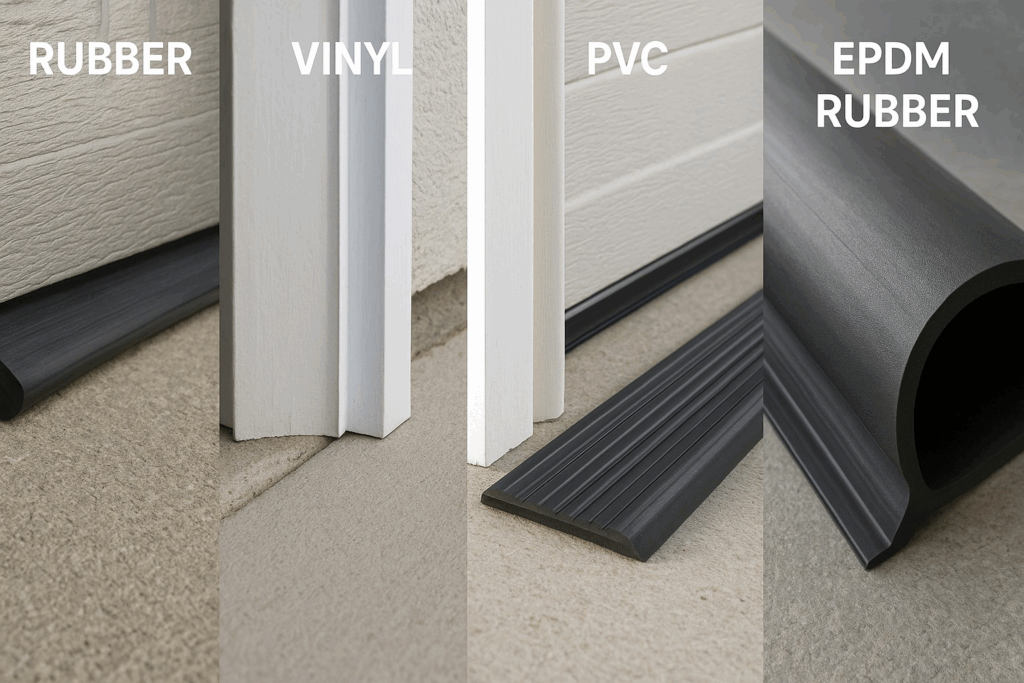
- Rubber: Offers excellent flexibility and remains effective in both high and low temperatures. Ideal for bottom seals that encounter frequent movement.
- Vinyl: Cost-effective and easy to replace. Often used for side and top seals due to its pliability and weather resistance.
- PVC: Rigid and highly durable. Great for threshold seals and outdoor exposure. Works well in both residential and commercial garages.
- EPDM Rubber: Withstands extreme temperatures and resists drying or cracking over time. Considered a premium choice for sealing applications.
At Fish Creek Garage Doors, we use only top-quality materials tested for performance in high-humidity and realfeel® environments. Our technicians match the materials to your specific garage door design and sealing requirements for maximum protection.
Should You DIY or Call a Professional?
While many homeowners are drawn to DIY options, garage door weather stripping requires precision, experience, and the right tools to ensure an airtight fit. Incorrect installation often results in uneven seals, persistent air leaks, or even damage to the garage door itself.
Pros of DIY Installation
- Lower upfront cost if you already have the tools
- Straightforward if you are replacing a door sweep on a newer door
- Some kits include step-by-step guides for basic repairs
Advantages of Professional Installation
- Precise fitting with no gaps or uneven pressure
- Customized sealing solutions for older or non-standard doors
- Full inspection of the entire garage door system during service
- Access to commercial-grade tools and materials
At Fish Creek Garage Doors, our team follows a comprehensive inspection and installation process that ensures every component is aligned, sealed, and tested for performance. We guarantee a perfect seal for every door, whether it is a standard residential model or a commercial dock-level door.
Real Example from the Field: Weather Stripping Success in Alden Bridge
One of our recent clients in Alden Bridge, located on Deer Rush Drive, experienced severe drafts and moisture problems inside their garage. The family used their garage as a home gym, but the fluctuating temperatures and moisture buildup made it nearly unusable during the summer. Our inspection revealed cracked side seals, a damaged bottom seal, and no threshold seal in place.
We replaced the old weather stripping with a brushseal kit for the side panels, a thick EPDM bottom seal for insulation, and a PVC threshold seal that helped keep water and pests out. Within a week, they noticed a ten-degree improvement in garage temperature and a visible reduction in moisture and condensation. Their HVAC unit also ran less frequently, and their energy usage dropped by fifteen percent.
Maintenance Tips to Extend the Life of Your Weather Stripping
Maintaining your garage door weather stripping is simple and highly effective. Regular maintenance helps avoid premature failure and ensures continuous energy savings.
Maintenance Guide:
- Clean seals every two to three months with warm water and a mild detergent
- Avoid petroleum-based cleaners that can degrade rubber or vinyl
- Check for cracks, warping, or gaps every season, especially before summer or winter
- Reapply caulking or adhesive if seals start to loosen
- Keep the garage door aligned and properly lubricated to avoid strain on the seals
Scheduled maintenance from a professional service like Fish Creek Garage Doors ensures all components are checked for wear, functionality, and continued energy efficiency.
Final Thoughts: Sealing the Path to Comfort, Protection, and Savings
In Alden Bridge, where realfeel conditions can be extreme and weather patterns are unpredictable, protecting your home begins with the garage. A properly sealed garage door not only blocks out wind, rain, moisture, and pests, but it also prevents significant energy loss. Garage door weather stripping is a small investment that delivers massive long-term benefits.
When installed professionally and maintained regularly, weather stripping protects your home’s structural integrity, keeps your family comfortable, reduces your energy bills, and even improves your indoor air quality. It is an essential component of any energy-efficient home.
How Can Fish Creek Garage Doors Help You?
At Fish Creek Garage Doors, we proudly serve homeowners throughout Montgomery, TX, and Alden Bridge with unmatched professionalism and expertise. Whether you need new garage door weather stripping, a complete sealing upgrade, or seasonal maintenance, our team is ready to help.
Here’s what we offer:
- Comprehensive garage inspections
- Expert weather stripping installation using top-grade materials
- Energy efficiency consultations and tune-ups
- Emergency sealing services for water damage prevention
- Professional garage door repair and opener servicing
📍 Address:791 Fish Creek Thoroughfare Suite 51, Montgomery, TX 77316
📞 Phone: (936) 280-0359
Let us help you protect your garage, save on energy, and enjoy lasting comfort in every season. Call Fish Creek Garage Doors today to schedule your garage door weather stripping service and experience the difference of a truly sealed and energy-efficient home.
Frequently Asked Questions (FAQs)
1. How often should I replace my garage door weather stripping?
Most garage door weather stripping lasts between two to five years, depending on climate exposure, usage frequency, and material quality. In humid regions like Alden Bridge, it’s a good idea to inspect the seals annually and replace them at the first signs of wear or cracking.
2. Can garage door weather stripping reduce noise from outside?
Yes, weather stripping can help muffle outdoor noise by sealing gaps where sound travels into the garage. While it won’t provide full soundproofing, it significantly reduces echoes, street noise, and wind sounds entering through the door.
3. Is weather stripping resistant to UV rays and sun damage?
High-quality weather stripping materials like EPDM rubber and UV-treated vinyl are specifically designed to resist sun damage and fading. Choosing UV-resistant options ensures a longer lifespan in sun-exposed areas such as garage doors facing west or south.
4. Does weather stripping affect the garage door opener or operation?
Properly installed weather stripping should not interfere with the garage door opener or door movement. In fact, it can improve performance by stabilizing door alignment and reducing resistance caused by drafts or debris.